How to Improve Creative Writing Skills: 15 Practical Strategies to Become a Better Writer
Learning how to improve creative writing skills takes practice, patience, and the right techniques. By reading regularly, writing every day, improving your vocabulary, and editing your work carefully, you can become a stronger, more confident writer. These 15 practical strategies will help you develop writing skills that keep readers engaged.
Key Takeaways
- Creative writing is a skill that improves with regular practice.
- Reading quality content helps you learn new writing techniques.
- Writing every day builds confidence and creativity.
- Editing is just as important as writing the first draft.
- Understanding your audience helps you create more engaging content.
Table of Contents
- Introduction
- What Are Creative Writing Skills?
- Why Creative Writing Skills Matter
- Read Every Day
- Practice Writing Daily
- Build a Rich Vocabulary Naturally
- Observe the World Around You
- Write for Your Readers
- Show, Don’t Just Tell
- Edit Like a Professional Writer
- Write Strong Introductions
- Learn Basic SEO Writing
- Create an Outline Before You Start Writing
- Quick Comparison
- Avoid Common Writing Mistakes
- Develop Your Unique Writing Voice
- Learn from Feedback
- Practice Different Types of Creative Writing
- Never Stop Learning
- Frequently Asked Questions
- Final Thoughts
Introduction
Have you ever stared at a blank page, knowing what you want to say but not how to say it? Every writer experiences this at some point. The good news is that strong writing isn’t something you’re born with—it’s a skill you build through practice, feedback, and the right techniques. In this guide, you’ll discover 15 practical strategies to improve your creative writing skills and become a more confident storyteller.
What Are Creative Writing Skills?
Creative writing skills are the abilities that help you express ideas in a clear, engaging, and meaningful way. These skills include storytelling, vocabulary, sentence structure, imagination, emotional expression, and understanding your audience.
Unlike academic or technical writing, creative writing gives you the freedom to share ideas in a way that captures attention and keeps readers interested. The goal is not only to inform but also to inspire, entertain, or create an emotional connection.
Whether you are writing a blog post, a short story, or website content, strong creative writing skills make your work more enjoyable to read and easier to understand.
Why Creative Writing Skills Matter
Strong creative writing skills can benefit you in many ways. They help you communicate your ideas more clearly, create content that readers enjoy, and build confidence as a writer.
Improving your writing skills can also help you:
- Capture your reader’s attention.
- Explain ideas more effectively.
- Create engaging blog posts and stories.
- Build trust with your audience.
- Improve the quality of your content.
- Become a more confident writer.
Remember, successful writers are not simply born with talent. They improve by reading, practicing, editing, and learning from every piece of writing they create.
1. Read Every Day

If you want to become a better writer, start by reading every day. Reading exposes you to different writing styles, new ideas, and creative techniques that naturally improve your own writing. It also helps you understand how experienced writers keep readers interested.
Choose books, blogs, magazines, or articles from different genres. Pay attention to how authors introduce ideas, describe scenes, and end their stories. As you read more, you’ll naturally improve your vocabulary and develop a stronger writing style.
Even reading for just 20 minutes a day can inspire new ideas and improve your writing over time.
💡 Pro Tip
Keep a notebook of interesting words, phrases, or writing techniques you come across while reading. Reviewing these notes regularly can inspire your own writing.
2. Practice Writing Every Day

Like any other skill, writing gets better the more you practice. Even spending just 20–30 minutes writing each day can help you build confidence, improve your creativity, and develop stronger writing habits.
You don’t need to write something perfect. Focus on building the habit of writing regularly. You can keep a journal, write short stories, describe your surroundings, or create blog drafts. Every writing session helps you become more confident and improves your ability to express ideas clearly.
Remember, your first draft doesn’t have to be perfect. The goal is to keep writing and improve through practice.
3. Build Your Vocabulary Naturally
Learning new words can make your writing clearer and more engaging. Instead of trying to use difficult vocabulary, focus on understanding words that fit naturally into your writing style. However, using difficult words just to impress readers can make your content harder to understand.
Instead, learn new words naturally through reading, listening to podcasts, and paying attention to how experienced writers use language. When you discover a useful word, try using it in your own sentences until it feels natural.
Clear writing is always more effective than complicated writing.
Focus on understanding and using new words naturally instead of memorizing long lists.
4. Observe the World Around You

Pay attention to the people you meet, the places you visit, and the conversations you hear. These small details can inspire stories, characters, and fresh ideas.
Practice observing your surroundings using all five senses. Notice colors, sounds, emotions, smells, and textures. Including these details in your writing helps readers picture your scenes and connect with your message.
Good writers are often good observers.
5. Write for Your Readers
Before you start writing, think about the person who will read your article. Understanding your audience helps you choose the right words, examples, and tone to keep readers interested. Before you start writing, think about who will read your content and what they hope to learn.
Use simple language, organize your ideas clearly, and avoid unnecessary jargon. Break long paragraphs into smaller sections and use headings to improve readability.
When readers can easily understand your message, they are more likely to stay engaged and continue reading.
💡 Pro Tip
Don’t try to sound like someone else. Read from different writers to learn new techniques, but let your own voice develop naturally through regular practice.
6. Show, Don’t Just Tell
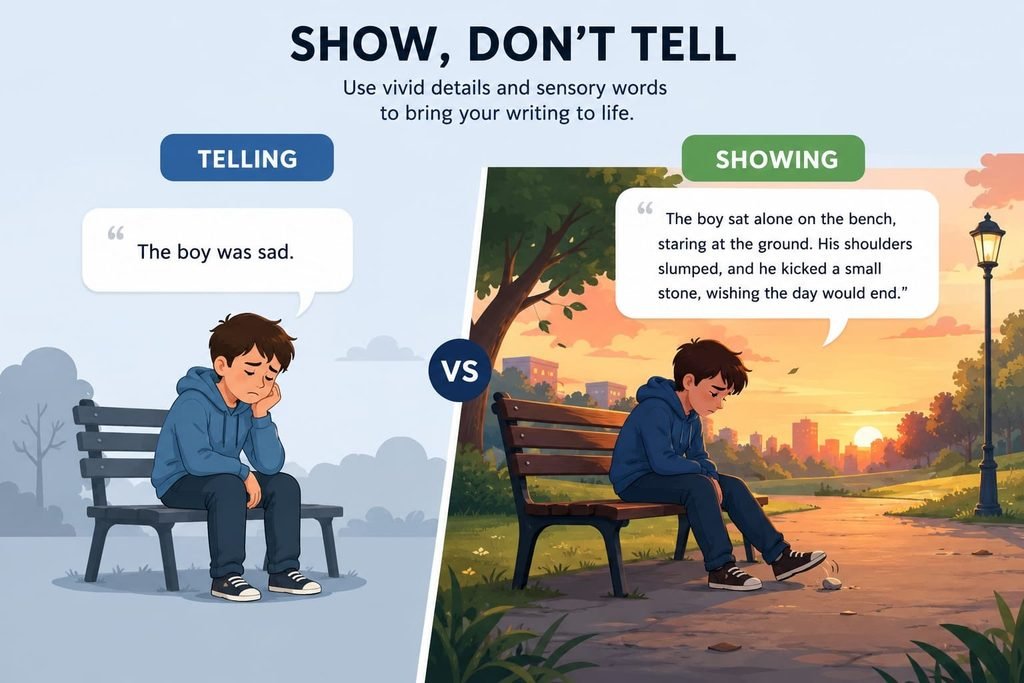
One of the most valuable creative writing techniques is learning to show instead of simply telling. Rather than stating how someone feels, use actions, dialogue, and descriptions to help readers experience the emotions themselves.
For example:
Telling: Sarah was nervous before her presentation.
Showing: Sarah’s hands trembled as she adjusted her notes. She took a deep breath and glanced around the room before stepping onto the stage.
The second example helps readers imagine the scene and connect with the character more naturally.
7. Edit Like a Professional Writer
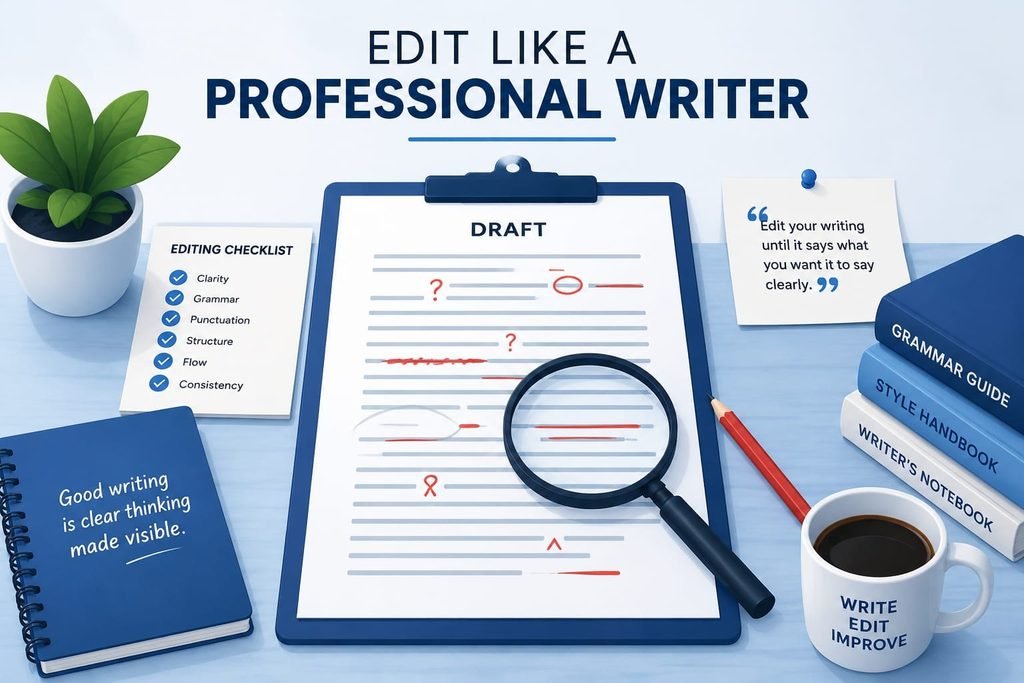
Excellent writing rarely happens in the first draft. The editing process is where ideas become clearer, sentences become stronger, and mistakes are removed.
After finishing your first draft, take a short break before reviewing it. Read your work slowly and ask yourself:
- Is every sentence easy to understand?
- Are there unnecessary words or repeated ideas?
- Does each paragraph support the main topic?
- Are grammar and punctuation correct?
Reading your article aloud is another simple way to catch awkward sentences that you might miss while reading silently.
8. Write Strong Introductions
Your introduction is the first impression readers have of your content. If it fails to capture their attention, many people may leave before reading the rest of the article.
A strong introduction should:
- Clearly explain the topic.
- Address the reader’s problem or question.
- Create curiosity.
- Encourage readers to continue.
Keep your opening simple, relevant, and focused on what readers will gain from the article.
9. Learn Basic SEO Writing
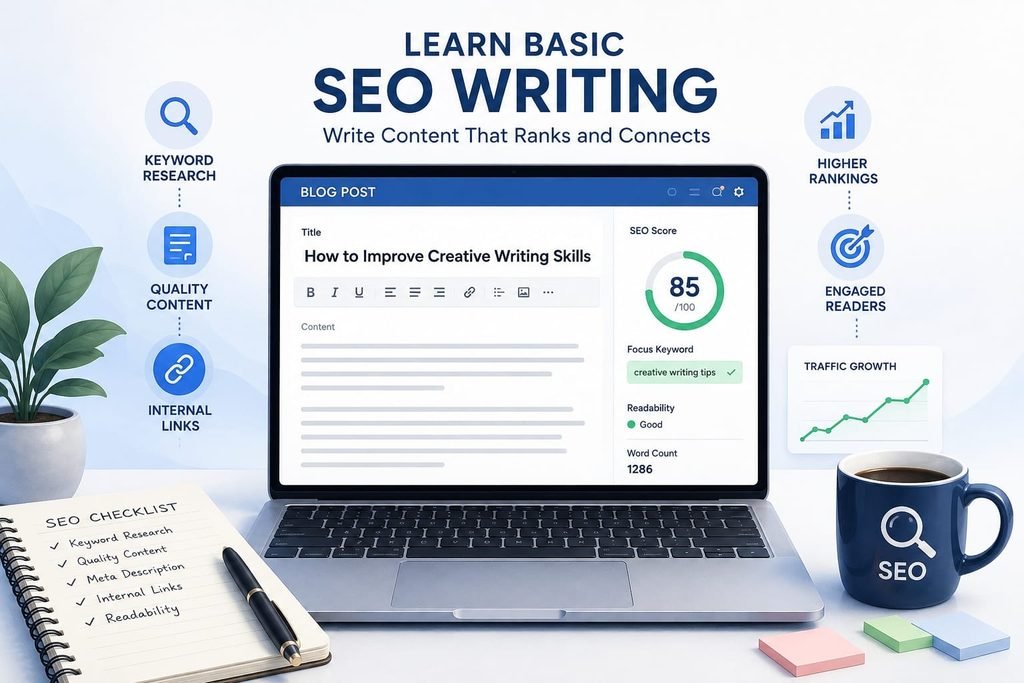
If you write blog posts or website content, understanding basic SEO (Search Engine Optimization) can help your articles reach more readers.
Use your primary keyword naturally in important places such as the title, introduction, headings, and conclusion. Include related keywords where they fit naturally, but avoid repeating them excessively.
Your main focus should always be writing helpful content for people. Search engines reward articles that provide clear, valuable, and well-organized information.
10. Create an Outline Before You Start Writing
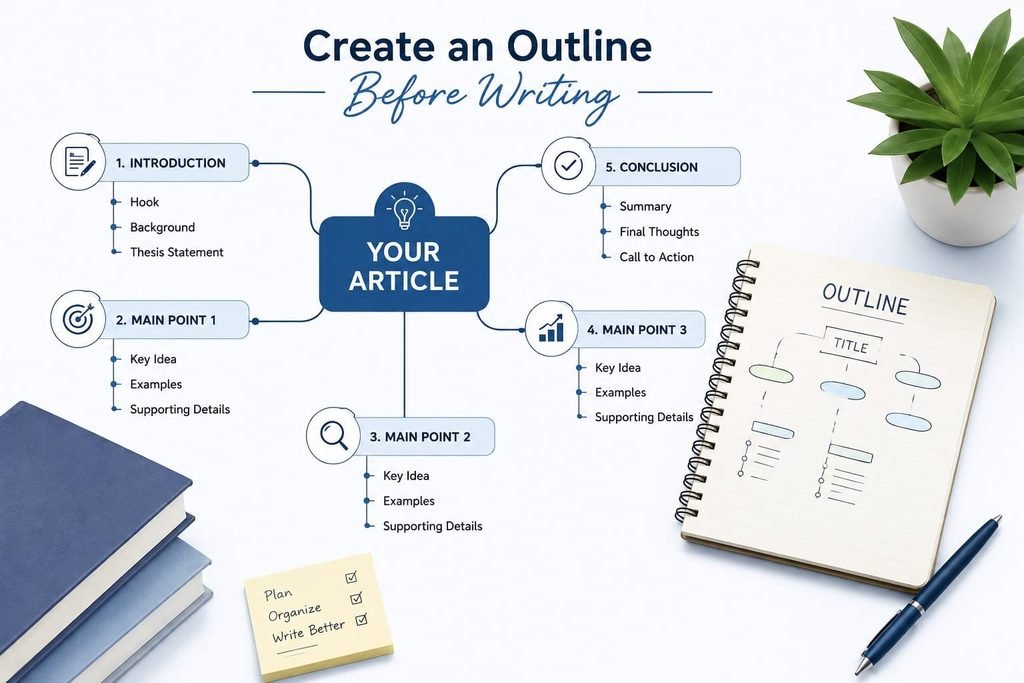
Many writers struggle because they begin writing without a clear plan. Creating a simple outline helps organize your ideas before you start.
Your outline can include:
- Main topic
- Headings
- Key points
- Examples
- Conclusion
Planning your article first saves time, improves organization, and makes the writing process much easier.
Quick Comparison
| Writing Without a Plan Ideas may feel scatteredEasier to miss important pointsRequires more editingWriting takes longer | Writing With an Outline Ideas stay organizedCovers every key pointProduces a clearer first draftWriting becomes faster and smoother |
💡Pro Tip
Great writing isn’t about finishing quickly. It is about communicating clearly. Spending a few extra minutes planning and editing can make a significant difference in the quality of your work.
11. Avoid Common Writing Mistakes
Even experienced writers make mistakes, but recognizing them is the first step toward improvement. Common issues such as grammar errors, repetitive words, long sentences, and unclear ideas can reduce the quality of your writing.
After completing your draft, review it carefully. Check for spelling, punctuation, sentence structure, and clarity. Reading your work aloud can also help you notice awkward wording that might otherwise go unnoticed.
Remember, clear and simple writing is usually more effective than writing that sounds overly complicated.
12. Develop Your Unique Writing Voice
Every writer has a unique style, and developing your own voice takes time and practice. Instead of copying another writer’s tone, focus on expressing your ideas in a way that feels natural to you.
Reading different authors can inspire you, but your goal should be to create content that reflects your personality and connects with your readers. A consistent writing voice helps people recognize your work and builds trust over time.
13. Learn From Feedback

Constructive feedback is one of the fastest ways to improve your writing. Share your work with trusted friends, teachers, editors, or fellow writers and ask for honest opinions.
Pay attention to repeated suggestions. If multiple readers point out the same issue, it’s a good opportunity to strengthen that area of your writing.
Feedback is not criticism—it’s a valuable tool that helps you grow as a writer.
14. Practice Different Types of Creative Writing
Trying different forms of writing helps you build a wider range of skills. Instead of writing only one type of content, experiment with:
- Short stories
- Blog posts
- Personal essays
- Poetry
- Fiction
- Website content
- Creative journals
Each format teaches something new, whether it’s storytelling, description, dialogue, or organizing ideas effectively.
15. Never Stop Learning
Writing is a lifelong learning process. Even professional writers continue improving by reading books, taking courses, practicing regularly, and staying curious.
Set small writing goals, celebrate your progress, and keep challenging yourself with new topics. Every article, story, or journal entry is another step toward becoming a better writer.
Frequently Asked Questions
How long does it take to improve creative writing skills?
The time varies for everyone. With consistent practice, regular reading, and thoughtful editing, many writers notice improvement within a few months.
What is the best way to practice creative writing?
Writing every day, reading quality content, and reviewing your work are some of the most effective ways to improve your creative writing skills.
Can anyone become a good creative writer?
Yes. Creative writing is a skill that can be developed through patience, practice, and continuous learning.
Does reading help improve writing?
Absolutely. Reading exposes you to different writing styles, vocabulary, sentence structures, and storytelling techniques that can strengthen your own writing.
Final Thoughts
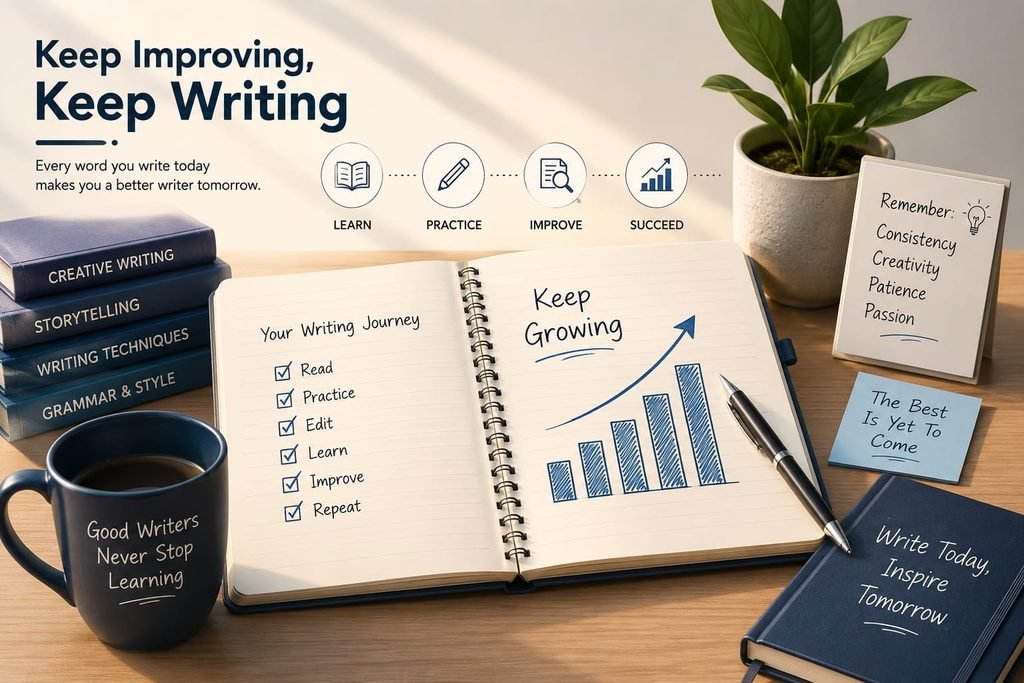
Learning how to improve creative writing skills is a journey that requires patience, practice, and a willingness to keep learning. Every successful writer started with small steps and improved through consistent effort.
By reading regularly, writing every day, observing the world around you, editing carefully, and welcoming feedback, you can steadily develop stronger writing skills. Progress may not happen overnight, but every piece you write brings you closer to becoming a more confident and effective writer.
Stay curious, keep practicing, and enjoy the process of growing as a writer. Your next article could be your best one yet.